Rômazi Aiueo
What is this site?
Rômazi Aiueo is the website aims to promote understanding and adoption of romaji, encouraging Japanese people to learn romaji and use Japanese-style romaji in as many situations as possible.
The first official rules for romaji were established in 1937. The Japanese-style romaji defined at that time was highly regarded even by foreign linguists and was adopted as an international standard (ISO 3602) in 1989. However, we rarely encounter this style of romaji. This is because the Japanese government revised its official rules in 1954 to allow the use of the English-style system, and that system has been used ever since. The government revised the official rules again in 2025, abolishing the Japanese-style system and formally elevating the English-style system. Such language policies run counter to the shared international ideals of cultural and linguistic diversity, representing a step backward in time.
Japan's mass media is not independent from the government, and scholars hesitate to speak out against policies. The information available on the internet is mostly of low quality. Therefore, the general public lacks accurate knowledge about romaji and writes romaji spellings incorrectly by imitating romaji seen on signs and advertisements. Although romaji is part of the Japanese language, Japanese people cannot write it correctly.
This is an international embarrassment and must be rectified. This site was created with that as its primary purpose.
Contents
Pages on the Top Menu
- はじめに: introduction (top page)
- あらまし: overview
- なりたち: history of romaji
- いろいろ: various types of romaji
- かきかた: how to write romaji
- からくり: tools
- おさらい: teaching materials
- つながり: external links
Other Pages
- Kunrei System (cabinet order)
- Hepburn System (commonly used)
- Japanese System (pre-Kunrei System)
- Portuguese System (historical)
- Person's Names
- Words and Phrases
- Poems and Stories
- Romaji Movement
- Text Editor
- Sitemap
Screen Keyboard
If you need to input kanamoji (hiragana and katakana), please use this keyboard.
Gallery
Some pictures picked up from the contents. What do you think of the last one?

"Feiqe Monogatari" published in the 16th century.
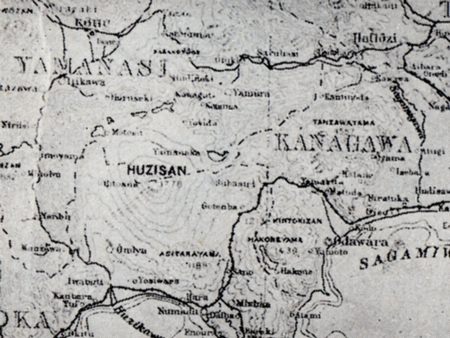
Old map. HUZISAN means Mt. Fuji.

Elementary school textbook.

Fashion magazine.
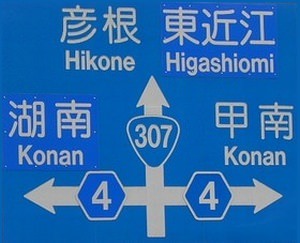
Road sign...???
Terminology
Following words may confuse machine translation.
| JP | EN |
|---|---|
| ローマ字 | 1) Latin alphabet, roman letters 2) romaji notation, romanized Japanese |
| ラテン文字 | Latin alphabet, roman letters |
| ローマ字表記 | romaji notation, romanized Japanese |
| ローマ字文 | romaji sentence, Japanese sentences written in roman letters |
| ローマ字入力 | romaji input, typing method to input Japanese using roman letter keys |
| ローマ字論 | romaji theory, that claims that Japanese should be written in roman letters |
| ローマ字運動 | romaji movement, social movement based on romaji theory |
| かな文字 | kana characters |
| かな文字表記 | kana character notation |
| かな文字文 | kana sentence, Japanese sentences written in kana characters |
| かな入力 | kana input, typing method to input Japanese using kana character keys |
| かな文字論 | kana theory, that claims that Japanese should be written in kana characters |
| かな文字運動 | kana movement, social movement based on kana theory |
| 漢字 | kanji, Chinese characters |
| 漢字仮名交じり文 | kanji-kana mixture sentence, Japanese sentences written in kanji and kana characters |
| 「英語」 | English classes in school |
| 「国語」 | Japanese classes in school |
| ヘボン式 | Hepburn system (romanization method), by J. C. Hepburn |
| 訓令式 | Kunrei system (romanization method), cabinet order |
| 日本式 | Japanese-style system (romanization method), pre-Kunrei system |
| 標準式 | Standard system, a variant of Hepburn system, extended version |
| 「英語式」 | English-style system, a variant of Hepburn system |
| 99式 | 99-system, a variant of Kunrei system, proposed in 1999 |
| 「姓」 | family name, last name |
| 「名」 | given name, first name |
| ◯ | good, correct, yes, recommended |
| △ | good with conditions, acceptable |
| ✕ | bad, wrong, no, prohibited |